

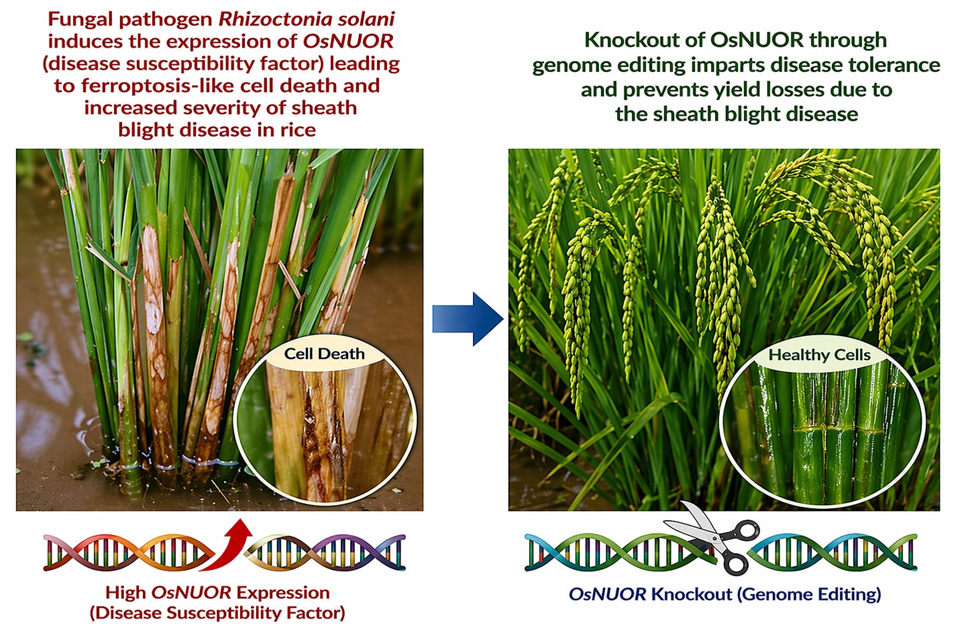
Sheath blight disease caused by a necrotrophic fungal pathogen, Rhizoctonia solani, causes upto 20% annual yield loss in rice. In a recent study, NIPGR scientists have identified a disease susceptibility factor, which when inactivated by gene editing showed high tolerance to sheath blight in rice. This study is published in The Plant Cell. BRIC-NiPGR researchers have unravelled a novel susceptibility mechanism, wherein pathogen upregulated host OsNUOR gene to induce ferroptosis like cell death and elicit necrotic disease lesions in rice. The knockout of the OsNUOR through genome editing imparts disease tolerance in rice. The study paves ways for developing sheath blight disease resistant rice lines through genome editing of susceptibility factor. This has far fetching implication towards sustainable agriculture and global food security, as the sheath blight disease causes upto 20% annual yield loss in rice, globally. For detailed report (https://doi.org/10.1093/pcell/koag112)